Today’s message
Read and reflect
Introduction
Poverty Is an Antichrist, and Excessive Wealth Is One Hell of a Temptation.
No wonder!!!!
Agur prayed one of the most financially intelligent prayers in Scripture.
He did not pray, “Lord, make me the richest man in town.” Neither did he pray, “Lord, keep me poor so everybody will know I am humble.”
His prayer was essentially:
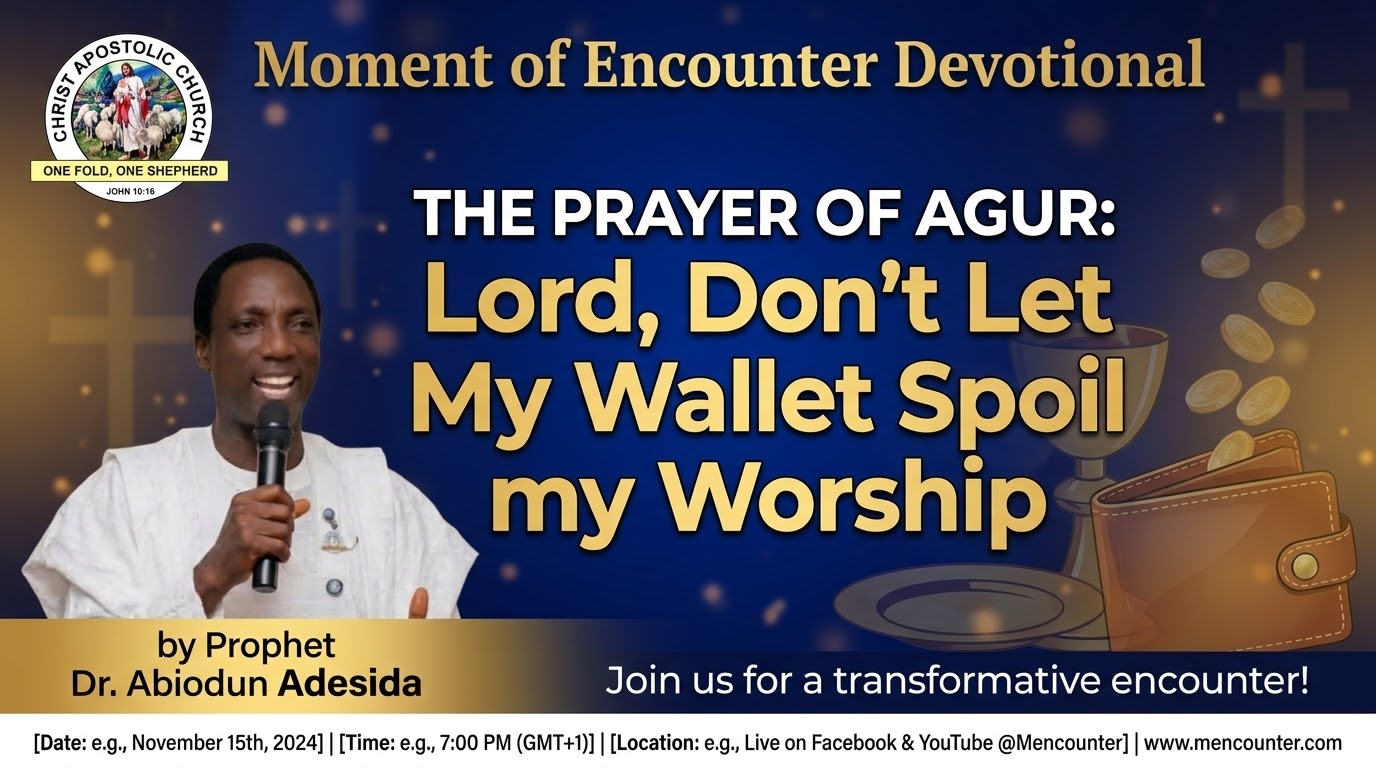
“Lord, don’t let my wallet spoil my worship.”
Agur understood that money can test a man from both directions. Poverty can tempt you to question God's faithfulness, while excessive wealth can tempt you to question whether you still need God at all.
In that sense, poverty behaves like an antichrist—it opposes dignity, pressures conviction, and can tempt people away from godly living. Yet excessive wealth can become one hell of a temptation.
Heaven conducts financial examinations in two halls:
Hall A: “There is nothing in the account.”
Hall B: “There is more than enough in the account.”
Different question papers.
Same Examiner.
And surprisingly, some people who passed Hall A with fasting and prayer entered Hall B and forgot the name of the Lecturer!
1. Poverty Can Put Your Convictions Under Pressure
Agur prayed:
«“Lest I be poor, and steal, and take the name of my God in vain.”»
He understood that prolonged lack can place tremendous pressure on character.
When the refrigerator is empty, school fees are due, rent is knocking, and your bank app looks like a cemetery, even a strong believer may hear some very creative suggestions from the flesh.
Suddenly, “God will provide” begins competing with, “Maybe I should just arrange something.”
Israel demonstrated this in Exodus 16. These were people who had just crossed the Red Sea, yet hunger quickly edited their testimony.
Yesterday: “The LORD is my strength and song!”
Today: “Moses, where is the food?”
Amazing!
They remembered Egyptian cooking and temporarily forgot Egyptian slavery.
An empty stomach can sometimes give yesterday’s bondage a good public-relations department.
Yet Job demonstrated another possibility. After devastating loss, he declared:
«“The LORD gave, and the LORD hath taken away; blessed be the name of the LORD.”
— Job 1:21»
That is spiritual maturity: when your possessions disappear but your worship remains.
Poverty asks:
“Will you still serve God when there is no testimony alert to post?”
2. Excessive Wealth Can Make God Look Unnecessary
Agur continued:
«“Lest I be full, and deny thee, and say, Who is the LORD?”»
This may actually be the more dangerous examination.
Poverty often makes people cry to God. Prosperity can make some people forget His address.
When money begins to answer questions quickly, prayer can quietly become shorter.
Before the breakthrough:
“Father, in the mighty name of Jesus!”
After the breakthrough:
“Lord, You know my heart.”
Before prosperity, three hours of prayer.
After prosperity, “Please continue praying for me; I have a meeting.”
Agur knew that fullness can produce forgetfulness.
Moses gave Israel the same warning in Deuteronomy 8:11–14: when houses multiply, silver increases, and possessions expand, “then thine heart be lifted up, and thou forget the LORD thy God.”
Notice the danger:
The problem was not having wealth.
The problem was wealth having them.
Solomon is another sobering example. The young king who once asked God for wisdom eventually accumulated wealth, influence, political alliances and wives until his heart drifted (1 Kings 11:1–4).
Prosperity asks:
“Now that you can afford many things, can you still afford humility?”
3. Poverty and Riches Preach Opposite Sermons—but Both Can Lead Away From God
Poverty whispers:
“God has forgotten you.”
Excessive wealth whispers:
“You don't really need God.”
One produces desperation.
The other can produce self-sufficiency.
One says:
“God, where are You?”
The other says:
“God, I can handle this.”
Both can damage worship.
This is why the real spiritual issue is not ultimately the amount in your bank account.
It is who sits on the throne of your heart when the account changes.
A poor man can worship money he does not have.
A wealthy man can be completely surrendered to God despite having abundance.
So Christianity is neither the glorification of poverty nor the demonization of prosperity.
The question is:
Can God trust your heart with both lack and abundance?
4. Agur’s Answer: Give Me What Will Not Destroy Me
Agur prayed:
«“Feed me with food convenient for me.”»
What wisdom!
He was essentially saying:
“Lord, give me what I need, and give me the character required to handle what You give me.”
That is a better prayer than merely shouting, “My financial doors must open!”
Because some doors require maturity before opening.
Paul eventually reached this spiritual equilibrium:
«“I know both how to be abased, and I know how to abound...”
— Philippians 4:12»
Paul could survive an empty pocket without becoming dishonest and handle a full pocket without becoming arrogant.
That is Christian maturity.
When money comes, worship remains.
When money goes, worship remains.
The balance may change.
The God does not.
Life Application
Do not romanticize poverty; lack can exert terrible pressure on human dignity and integrity.
But do not idolize wealth either. Plenty has buried people spiritually whom poverty could not defeat.
If your income increases while your prayer life decreases, your wallet may be spoiling your worship.
If financial hardship makes you abandon integrity, your empty wallet is beginning to preach louder than your Bible.
God does not merely want to bless your pocket.
He wants your pocket and your worship to remain under the same Lordship.
Prayer Points
1. Father, deliver me from poverty that pressures me toward compromise.
2. Lord, prosper me without allowing prosperity to corrupt my heart.
3. Give me the discipline to possess wealth without allowing wealth to possess me.
4. Whether my account is full or temporarily lean, let my worship remain constant.
Poverty Is an Antichrist, and Excessive Wealth Is One Hell of a Temptation.
No wonder!!!!
Agur prayed one of the most financially intelligent prayers in Scripture.
He did not pray, “Lord, make me the richest man in town.” Neither did he pray, “Lord, keep me poor so everybody will know I am humble.”
His prayer was essentially:
“Lord, don’t let my wallet spoil my worship.”
Agur understood that money can test a man from both directions. Poverty can tempt you to question God's faithfulness, while excessive wealth can tempt you to question whether you still need God at all.
In that sense, poverty behaves like an antichrist—it opposes dignity, pressures conviction, and can tempt people away from godly living. Yet excessive wealth can become one hell of a temptation.
Heaven conducts financial examinations in two halls:
Hall A: “There is nothing in the account.”
Hall B: “There is more than enough in the account.”
Different question papers.
Same Examiner.
And surprisingly, some people who passed Hall A with fasting and prayer entered Hall B and forgot the name of the Lecturer!
1. Poverty Can Put Your Convictions Under Pressure
Agur prayed:
«“Lest I be poor, and steal, and take the name of my God in vain.”»
He understood that prolonged lack can place tremendous pressure on character.
When the refrigerator is empty, school fees are due, rent is knocking, and your bank app looks like a cemetery, even a strong believer may hear some very creative suggestions from the flesh.
Suddenly, “God will provide” begins competing with, “Maybe I should just arrange something.”
Israel demonstrated this in Exodus 16. These were people who had just crossed the Red Sea, yet hunger quickly edited their testimony.
Yesterday: “The LORD is my strength and song!”
Today: “Moses, where is the food?”
Amazing!
They remembered Egyptian cooking and temporarily forgot Egyptian slavery.
An empty stomach can sometimes give yesterday’s bondage a good public-relations department.
Yet Job demonstrated another possibility. After devastating loss, he declared:
«“The LORD gave, and the LORD hath taken away; blessed be the name of the LORD.”
— Job 1:21»
That is spiritual maturity: when your possessions disappear but your worship remains.
Poverty asks:
“Will you still serve God when there is no testimony alert to post?”
2. Excessive Wealth Can Make God Look Unnecessary
Agur continued:
«“Lest I be full, and deny thee, and say, Who is the LORD?”»
This may actually be the more dangerous examination.
Poverty often makes people cry to God. Prosperity can make some people forget His address.
When money begins to answer questions quickly, prayer can quietly become shorter.
Before the breakthrough:
“Father, in the mighty name of Jesus!”
After the breakthrough:
“Lord, You know my heart.”
Before prosperity, three hours of prayer.
After prosperity, “Please continue praying for me; I have a meeting.”
Agur knew that fullness can produce forgetfulness.
Moses gave Israel the same warning in Deuteronomy 8:11–14: when houses multiply, silver increases, and possessions expand, “then thine heart be lifted up, and thou forget the LORD thy God.”
Notice the danger:
The problem was not having wealth.
The problem was wealth having them.
Solomon is another sobering example. The young king who once asked God for wisdom eventually accumulated wealth, influence, political alliances and wives until his heart drifted (1 Kings 11:1–4).
Prosperity asks:
“Now that you can afford many things, can you still afford humility?”
3. Poverty and Riches Preach Opposite Sermons—but Both Can Lead Away From God
Poverty whispers:
“God has forgotten you.”
Excessive wealth whispers:
“You don't really need God.”
One produces desperation.
The other can produce self-sufficiency.
One says:
“God, where are You?”
The other says:
“God, I can handle this.”
Both can damage worship.
This is why the real spiritual issue is not ultimately the amount in your bank account.
It is who sits on the throne of your heart when the account changes.
A poor man can worship money he does not have.
A wealthy man can be completely surrendered to God despite having abundance.
So Christianity is neither the glorification of poverty nor the demonization of prosperity.
The question is:
Can God trust your heart with both lack and abundance?
4. Agur’s Answer: Give Me What Will Not Destroy Me
Agur prayed:
«“Feed me with food convenient for me.”»
What wisdom!
He was essentially saying:
“Lord, give me what I need, and give me the character required to handle what You give me.”
That is a better prayer than merely shouting, “My financial doors must open!”
Because some doors require maturity before opening.
Paul eventually reached this spiritual equilibrium:
«“I know both how to be abased, and I know how to abound...”
— Philippians 4:12»
Paul could survive an empty pocket without becoming dishonest and handle a full pocket without becoming arrogant.
That is Christian maturity.
When money comes, worship remains.
When money goes, worship remains.
The balance may change.
The God does not.
Life Application
Do not romanticize poverty; lack can exert terrible pressure on human dignity and integrity.
But do not idolize wealth either. Plenty has buried people spiritually whom poverty could not defeat.
If your income increases while your prayer life decreases, your wallet may be spoiling your worship.
If financial hardship makes you abandon integrity, your empty wallet is beginning to preach louder than your Bible.
God does not merely want to bless your pocket.
He wants your pocket and your worship to remain under the same Lordship.
Prayer Points
1. Father, deliver me from poverty that pressures me toward compromise.
2. Lord, prosper me without allowing prosperity to corrupt my heart.
3. Give me the discipline to possess wealth without allowing wealth to possess me.
4. Whether my account is full or temporarily lean, let my worship remain constant.
Reflection
Food for Thought:
If having less makes you doubt God, and having more makes you forget God, perhaps the greatest financial miracle is not merely receiving money—it is developing a heart that money cannot control.
If having less makes you doubt God, and having more makes you forget God, perhaps the greatest financial miracle is not merely receiving money—it is developing a heart that money cannot control.
Prayer
Prophetic Declaration
I declare over your life:
Lack will not destroy your integrity.
Prosperity will not destroy your spirituality.
Money will serve your purpose; it will not become your master.
May God deliver you from humiliating lack and preserve you from intoxicating abundance.
May your hands prosper without your heart becoming proud.
May your financial testimony become louder without your prayer altar becoming quieter.
And when God increases you, may you never become so blessed that you forget the One who blessed you.
Your wallet will not spoil your worship!
In Jesus’ name. Amen.
Your brother,
Prophet Dr. Abiodun Adesida
CAC Ibudo Ònà Abayọ
cacsolutioncenter@outlook.com
07007002462
08058140045
I declare over your life:
Lack will not destroy your integrity.
Prosperity will not destroy your spirituality.
Money will serve your purpose; it will not become your master.
May God deliver you from humiliating lack and preserve you from intoxicating abundance.
May your hands prosper without your heart becoming proud.
May your financial testimony become louder without your prayer altar becoming quieter.
And when God increases you, may you never become so blessed that you forget the One who blessed you.
Your wallet will not spoil your worship!
In Jesus’ name. Amen.
Your brother,
Prophet Dr. Abiodun Adesida
CAC Ibudo Ònà Abayọ
cacsolutioncenter@outlook.com
07007002462
08058140045